Software Development Outsourcing Services

10+Years Delivering for US Teams
6–8hDaily Nearshore Overlap (ET)
HIPAAReady Healthcare Delivery
100%IP Assigned to You

Software Development Outsourcing Company for US Product Teams

img

Software development outsourcing means partnering with an external engineering vendor that takes ownership of delivery — from discovery and architecture through build, QA, and release — while you keep product strategy and business outcomes. WTT Solutions is a software development outsourcing company built for US buyers who need senior talent, predictable communication, and domain depth in healthcare, EdTech, and HR tech.

Unlike marketplace freelancers or black-box offshore shops, we run transparent nearshore delivery from Central and Eastern Europe with 6–8 hours of daily overlap for US East Coast teams. Whether you need a vendor-managed dedicated development team or full project outsourcing, you get accountable leads, clear SLAs, and code you own. Exploring capacity instead of delivery ownership? See our IT staff augmentation services. Building a regulated product? Pair outsourcing with our custom healthcare software development company practice. Shipping a multi-tenant commercial product under vendor-owned delivery? See digital platform development services. Building HRIS, ATS, or payroll as the product? See HR software development services.

Why US Teams Choose Software Development Outsourcing Now

Hiring delays, skill gaps, and compliance risk stall roadmaps — outsourcing closes the gap without freezing product ownership.

45–90days average US engineering hire

Hiring Cycles Cannot Match Roadmap Pressure

Open reqs for senior backend, mobile, or domain engineers routinely take one to three months. Software development outsourcing services put a vetted pod on your backlog in weeks — not after another failed recruiter cycle — so launches and compliance milestones stop slipping.

2×faster access to niche skills

Niche Skills Are Harder Than Headcount

FHIR integrations, LMS standards, AI pipelines, and cloud modernization rarely sit idle on local job boards. Outsource software development to a partner whose bench already includes those specialties instead of burning quarters training generalists on production systems.

24/7risk if PHI handling is informal

Compliance Cannot Be an Afterthought

Healthcare software development outsourcing fails when vendors skip BAAs, audit logging, or least-privilege access. WTT structures contracts, environments, and delivery practices for HIPAA-aware work from day one — not as a retrofit after the first security questionnaire.

0value in opaque status reports

Black-Box Vendors Destroy Trust

Weekly PDFs without code access, skipped demos, and rotating anonymous developers are why leaders distrust outsourcing. Our model keeps you in the repositories, ceremonies, and decision logs — with named engineers and a delivery lead accountable for outcomes.

Success Stories

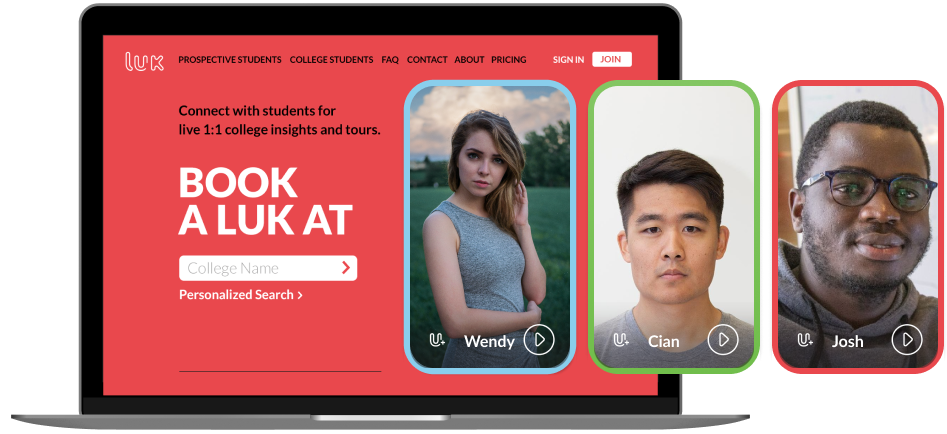
Connect with students for live 1-on-1 college insights and tours

Luklabs EdTech platform — custom LMS case study by WTT Solutions

EXPERTISE

Education

TECHNOLOGIES

React

Redux

Redux-Saga

Express

PostgreSQL

InversifyJS

Braintree

Amazon Web Service

Paypal

Software Development Outsourcing Services

FULL PROJECT OUTSOURCING WITH DELIVERY OWNERSHIP

FULL PROJECT OUTSOURCING WITH DELIVERY OWNERSHIP

We own scope planning, engineering, QA, and release management against agreed milestones. Ideal when you need a software outsourcing partner to ship a product or major module without expanding internal management bandwidth.

FULL PROJECT OUTSOURCING WITH DELIVERY OWNERSHIP

FULL PROJECT OUTSOURCING WITH DELIVERY OWNERSHIP

We own scope planning, engineering, QA, and release management against agreed milestones. Ideal when you need a software outsourcing partner to ship a product or major module without expanding internal management bandwidth.

VENDOR-MANAGED DEDICATED DEVELOPMENT TEAM

VENDOR-MANAGED DEDICATED DEVELOPMENT TEAM

A cross-functional dedicated development team — tech lead, engineers, QA, and PM — works exclusively on your product under WTT delivery management. Scale capacity quarterly while keeping institutional knowledge inside the pod.

CUSTOM PRODUCT, PLATFORM & MOBILE DELIVERY

CUSTOM PRODUCT, PLATFORM & MOBILE DELIVERY

Custom software development outsourcing for web platforms, APIs, and mobile apps — including mobile app development, Flutter, and React Native — with architecture, integrations, and post-launch hypercare.

How Software Development Outsourcing Works at WTT

A clear path from first call to production ownership — with knowledge transfer built in.

01

Discovery & Proposal

We clarify goals, constraints, compliance needs, and success metrics. You receive a delivery plan, team shape, timeline, and commercial model before engineering starts — no vague “we’ll figure it out in sprint one.”

02

Team Setup & Kickoff

Named engineers, tech lead, and delivery manager join your tools (Jira, GitHub/GitLab, Slack/Teams). We align branching, environments, Definition of Done, and reporting cadence in the first week.

03

Knowledge & Responsibility Transfer

For takeovers and modernizations we ingest docs, codebases, and runbooks, then stabilize CI/CD and quality gates before feature velocity ramps. You keep visibility into every repository and release.

04

Agile Delivery & QA

Two-week sprints, demoable increments, automated tests where they pay off, and security practices matched to your risk profile. Healthcare and EdTech projects add domain review — not just syntax review.

05

Release, Hypercare & Evolution

We ship, monitor, and stabilize, then plan the next roadmap slice or hand over cleanly. IP assignment and documentation are contractual defaults, not optional extras.

Same product sprint. Two very different delivery outcomes.

Illustrative software development outsourcing scenario: a US product team stuck with a black-box vendor versus a transparent nearshore pod that owns estimation, QA, and release — while you keep product strategy.

Delivery week · Vendor-managed outsourcing pod

Without accountable outsourcing

Mon–Fri · Black-box offshore / résumé dump

  • Product leadMon 9:00 AM
    Blocked — no clear estimate
  • EngineeringTue 2:15 PM
    Silent — overnight handoffs only
  • QA / releaseWed 4:40 PM
    Failed — no test ownership
  • StakeholdersFri 11:05 AM
    Surprised — demo slipped again
0Predictable increments shipped
HighManagement load on your side

With WTT software development outsourcing

Mon–Fri · Nearshore vendor-managed pod

  • Product leadMon 9:00 AM
    Aligned — scope + risks written
  • EngineeringTue 2:15 PM
    Visible — same-day ET overlap
  • QA / releaseWed 4:40 PM
    Owned — CI + acceptance clear
  • StakeholdersFri 11:05 AM
    Shipped — demoable increment
1+Working increment this week
LowDay-to-day management load
Need a vendor-owned delivery engine — not anonymous seats or a black box?Get a free estimate

Unique solutions we deliver through outsourcing

Three concrete engagement patterns US buyers ask us to own end-to-end — packaged as software development outsourcing (full project ownership or a vendor-managed dedicated development team), not client-managed staff augmentation.

Greenfield product & MVP outsourcing

From discovery and architecture through build, QA, and first release — a cross-functional pod that estimates, sequences risk, and ships a usable MVP or module while you keep product strategy and go-to-market. Ideal when you need software development outsourcing services with clear acceptance criteria, not a pile of résumés. Prefer seats under your PM instead? See IT staff augmentation.

Vendor-managed dedicated development team

A stable nearshore squad (tech lead, engineers, QA, delivery coordination) that accumulates codebase context and runs against your roadmap under our day-to-day management. You set priorities and accept increments; we own sprint mechanics, quality bars, and release hygiene. This is dedicated development team outsourcing — not marketplace freelancers cycling every month. Ready to scope capacity? Get started.

Domain-heavy delivery (healthcare & EdTech)

When the hard part is regulated workflows, integrations, or learning standards — not just CRUD — we package custom software development outsourcing with domain leads who already know HIPAA-aware patterns, FHIR/HL7-adjacent work, or LMS/content constraints. Explore our custom healthcare software development company and EdTech hubs for vertical proof, then engage this pillar when you want vendor-owned delivery across the workstream.

Outsourcing vs Staff Augmentation

Choose based on who should manage day-to-day engineering — not on buzzwords. Need seats under your management? See IT staff augmentation.

Factor
Software Outsourcing (WTT)
IT Staff Augmentation
Who manages engineers
WTT delivery lead / tech lead
Your PM or tech lead
Best when
You need outcome ownership
You have strong internal leadership
Scope ownership
Vendor accountable for increments
You own backlog prioritization
Ramp speed
Pod formed for the engagement
Individual seats in ~2 weeks
Nearshore overlap
CEE teams, US-friendly hours
Same talent pool, client-managed
Healthcare / EdTech fit
Domain delivery practices included
Domain engineers embedded in your team
IP & contracts
IP assignment + NDA/BAA as needed
Risk of black-box delivery
Low — shared tools & demos
Low — engineers work in your tools
  • Advantage
  • Limitation or compromise
  • Criterion not met
Need seats under your management instead?See staff augmentation

Software Development Outsourcing Cost

Ranges to frame planning conversations — final quotes follow discovery scope and compliance needs.

Pilot / MVP

$40k – $90k

2–4 months

  • Focused product slice or module
  • Core squad + delivery lead
  • Discovery workshop included
  • CI/CD and basic QA gates
  • IP assignment & NDA
Get a Free Estimate
Most Popular

Product Pod

$25k – $55k / mo

Ongoing

  • Dedicated development team
  • Tech lead + eng + QA
  • Sprint demos & reporting
  • Nearshore US overlap
  • Optional BAA for healthcare
Get a Free Estimate

Enterprise Program

Custom Quote

6+ months

  • Multi-squad governance
  • Architecture & security review
  • Legacy modernization tracks
  • SLA-backed releases
  • Executive steering cadence
Talk to Us

Clients on Partnering with WTT Solutions

INDUSTRY RECOGNITION

USA
carousel-img
Lia AranUSAUSA

Luklabs

Acting CEO

The team is smart, creative, nice, calm, and professional, and they are problem solvers.
WTT Solutions paid attention to details. Most of their first iterations were very close to our intended designs. Consequentially, we didn’t have to do a ton of revisions in the QA phase.
I greatly enjoyed working with them.

Industries & Work We Outsource Successfully

Healthcare & digital health platforms

Healthcare & digital health platforms

HIPAA-aware clinical and admin systems

HIPAA-aware clinical and admin systems

EdTech & learning platforms

EdTech & learning platforms

Enterprise product modernization

Enterprise product modernization

Startup MVP to growth delivery

Startup MVP to growth delivery

Mobile apps (iOS, Android, cross-platform)

Mobile apps (iOS, Android, cross-platform)

AI / ML product engineering

AI / ML product engineering

API, integration & data platforms

API, integration & data platforms

QA automation & release engineering

QA automation & release engineering

Cloud, DevOps & platform reliability

Cloud, DevOps & platform reliability

Why Choose WTT as Your Outsourcing Company

01

Nearshore delivery for US teams

Nearshore delivery for US teams

CEE engineers with real-time overlap, English-first communication, and ceremonies that match your working day — not overnight ticket dumps.

02

Healthcare, EdTech & HR tech depth

Healthcare, EdTech & HR tech depth

We understand HIPAA, BAA workflows, EHR-adjacent integrations, SCORM/xAPI, LMS realities, and workforce HRIS/ATS objects — so outsourcing does not restart domain learning from zero. Vendor-managed MarTech software development — consent, sGTM, MAP/CDP takeovers — is scoped on our MarTech development company pillar. Custom HRIS and payroll product work is HR tech software development.

03

Transparent engineering

Transparent engineering

Your repos, your boards, named people, recorded decisions. Software development outsourcing companies should feel like an extension of your org — not a locked vendor portal.

04

Flexible engagement models

Flexible engagement models

Full project outsourcing, vendor-managed dedicated teams, or a clean handoff to staff augmentation if you later want client-managed seats.

05

IP, security, and continuity

IP, security, and continuity

Contractual IP assignment, NDAs, environment controls, and replacement SLAs so knowledge does not walk out with a single contractor.

elearning

img
img

Outsource Software Development with a Nearshore Partner Built for Healthcare & EdTech

What You Get When You Outsource

discovery-led scoping

Discovery-led scoping

architecture ownership

Architecture ownership

dedicated development team

Dedicated development team

nearshore collaboration

Nearshore collaboration

agile sprint delivery

Agile sprint delivery

qa & test automation

QA & test automation

devops & ci/cd

DevOps & CI/CD

security & compliance controls

Security & compliance controls

product modernization

Product modernization

mobile & cross-platform apps

Mobile & cross-platform apps

ai feature delivery

AI feature delivery

post-launch hypercare

Post-launch hypercare

Technology Stack for Outsourced Delivery

AI & ML
OpenAIOpenAI
Google GeminiGoogle Gemini
Anthropic ClaudeAnthropic Claude
LangChainLangChain
LlamaIndexLlamaIndex
Perplexity APIPerplexity API
RAG / Pinecone / QdrantRAG / Pinecone / Qdrant
Frontend
ReactReact
Next.jsNext.js
TypeScriptTypeScript
VueVue
Nuxt.jsNuxt.js
SvelteSvelte
Tailwind CSSTailwind CSS
Backend
Node.jsNode.js
PythonPython
.NET.NET
NestJSNestJS
FastAPIFastAPI
ExpressExpress
DjangoDjango
Data & Storage
PostgreSQLPostgreSQL
MySQLMySQL
MongoDBMongoDB
RedisRedis
DevOps & Infrastructure
DockerDocker
KubernetesKubernetes
TerraformTerraform
GitHub ActionsGitHub Actions
Mobile & Desktop
React NativeReact Native
FlutterFlutter
ExpoExpo
PythonPython
WPFWPF
img
img

Hi, I’m Serge!
CEO & Co-founder at WTT Solutions
Do you have a new project? Or want to say "Hello"...

Here’s how you can get in touch

Software Development Outsourcing FAQ

+

What is software development outsourcing?

Software development outsourcing is a partnership model where you engage an external software development outsourcing company to design, build, test, release, and often evolve software products or modules while your organization retains ownership of product strategy, brand, customers, and commercial outcomes. In practice, the vendor supplies cross-functional capacity — engineering, QA, and delivery leadership — plus a process for estimation, sprint execution, and release quality. You approve priorities and accept increments; the partner owns the mechanics of getting working software into production environments. This is not the same as buying off-the-shelf SaaS, and it is not the same as hiring freelancers one résumé at a time. A mature outsourcing engagement includes named people, shared repositories, contractual IP assignment, and explicit accountability for delivery risks. Buyers typically pursue outsourcing software development to compress time to market, access specialties that are scarce locally (healthcare integrations, LMS standards, mobile, cloud modernization, AI features), and avoid the fixed cost of building a large permanent bench before demand is proven. Software development outsourcing works when goals are measurable, communication is real-time enough for decisions, and security/IP terms are clear before kickoff. It fails when scope is fantasy, stakeholders disappear after the SOW is signed, or the vendor hides work behind status PDFs. WTT Solutions delivers outsourcing as transparent nearshore collaboration for US teams: Central and Eastern European engineers with substantial daily overlap, demos you can trust, and domain depth in healthcare and EdTech. If you only need individual engineers managed by your own leads, use our IT staff augmentation model instead of forcing an outsourcing contract. For regulated builds, combine this model with our custom healthcare software development company practice so compliance is designed in, not bolted on after the first customer questionnaire.
+

What software development outsourcing services does WTT Solutions provide?

WTT Solutions provides end-to-end software development outsourcing services for US product companies and digital teams that need accountable delivery, not anonymous résumé volume. Engagements commonly include greenfield product builds, platform and API programs, integration-heavy systems, mobile applications, AI-assisted product features, QA automation, DevOps enablement, and legacy modernization with staged cutovers. We can own a bounded project outcome or run an ongoing vendor-managed dedicated development team against your roadmap. Technology coverage spans modern web backends, cloud-native infrastructure, data pipelines, and mobile — including native and cross-platform delivery via mobile app development, Flutter, and React Native. Equally important is domain packaging. Healthcare and digital health work aligns to HIPAA-aware practices, BAAs when PHI is in scope, and the integration realities of clinical and operational systems through our custom healthcare software development company practice. Learning products leverage EdTech constraints — content standards, accessibility, learner analytics — via our EdTech software development team. What we refuse by default is black-box subcontracting chains and “follow the sun” opacity that hides who wrote your code. You get named engineers, shared tooling (your Jira/GitHub/Slack or agreed equivalents), sprint demos, and a delivery manager who escalates early. Discovery produces a team shape, assumptions, and risks before velocity theater begins. If your need is purely to hire specialists into your org chart under your management, we route you to hire pages or staff augmentation instead of dressing staffing up as outsourcing. That honesty is part of the service: the wrong model wastes more money than a slightly higher rate on the right one. In short: treat this as an operating decision about ownership, communication design, and risk — then select the partner and contract that match that decision rather than reversing into a model because a sales deck used the more fashionable label.
+

What outsourcing models do you offer (dedicated team, project-based, nearshore)?

We package agile software development outsourcing into models that match governance — not buzzwords. Project-based outsourcing fits bounded outcomes: an MVP, a migration tranche, a module with acceptance criteria, or a compliance-driven release. WTT owns planning and delivery toward that outcome, with change control when reality shifts. A vendor-managed dedicated development team fits ongoing product work: a stable pod (typically tech lead, engineers, QA, and delivery coordination) accumulates codebase context while we manage day-to-day execution quality. Capacity scales on a planned cadence without restarting procurement every quarter. Nearshore software development is our default collaboration design for US companies: Central and Eastern European engineers, English-first communication, and substantial overlap with Eastern Time for standups, pairing, and incident response. Nearshore is not a separate SKU — it applies to both project and dedicated-team outsourcing. Pure offshore models with minimal overlap exist in the market and can work for frozen, well-specified packages; we optimize for iterative product work where conversation quality determines defect rates. If you need client-managed individuals inside your org chart, that is staff augmentation — documented on IT staff augmentation — not a relabeled outsourcing SKU. Hybrid paths are common: discovery and architecture under outsourcing, then augmentation once your internal leadership wants direct control of a larger bench. We pick the model in discovery based on who should own the backlog, how defined the scope is, how regulated the data is, and how much leadership bandwidth you can assign weekly. The wrong model feels like “vendors never work”; the right model feels like an extension of your company with clearer contracts.
+

How do you protect IP, code ownership, and data security when we outsource?

Intellectual property and security must be contractual and operational from day one. WTT engagements include NDA coverage and IP assignment so work product created for your project is owned by you under the agreement. We do not lock clients into proprietary frameworks that block portability or hold repositories hostage at exit. You should be able to answer, before kickoff, what happens to access and artifacts on the first day after termination — and the answer should be boringly clear. Operationally, engineers work in your repositories or jointly controlled repos with access reviews, MFA expectations, and least-privilege environments. Secrets belong in secret managers; production access is gated; devices follow engagement rules (client-provisioned or controlled setups for sensitive programs). For healthcare software development outsourcing involving PHI, we execute a Business Associate Agreement when required and align logging, encryption, retention, and access patterns to your compliance program. Security questionnaires are expected, not resisted. Continuity protections matter as much as perimeter controls. We avoid single-person knowledge silos through tech-lead oversight, review standards, and replacement paths so a departure cannot ransom your roadmap. Architecture decisions and runbooks live where your team can see them. Still run due diligence on any software development outsourcing company: contract samples, subprocessors, offboarding checklists, penetration-test posture, and how subcontractors — if any — are controlled. WTT’s default is direct delivery with named engineers, not an opaque chain. If a vendor cannot explain access revocation or IP transfer in plain language, treat that as a disqualifier regardless of their sales polish or logo wall. In short: treat this as an operating decision about ownership, communication design, and risk — then select the partner and contract that match that decision rather than reversing into a model because a sales deck used the more fashionable label.
+

How long does it take to start an outsourced software project with WTT?

Most software development outsourcing engagements move from a serious first conversation to kickoff in about two to four weeks. The critical path is rarely “finding developers”; it is stakeholder availability, security review, environment access, and commercial/legal completion (including BAA when healthcare data is in scope). A typical sequence looks like: discovery call, written proposal with team shape and assumptions, mutual interviews for key roles, contract execution, tooling access, then sprint zero with working agreements. Faster starts happen for well-defined pilots when decision-makers respond quickly and environments already exist. Slower starts usually come from unclear internal ownership, prolonged vendor questionnaires, waiting on production access for brownfield takeovers, or scope that changes every meeting. We would rather surface those blockers early than pretend a date we cannot defend. For takeovers, we schedule an explicit knowledge-transfer and stabilization window before promising feature velocity. Skipping that window is how outsourcing creates outages in month one. If you need individuals writing tickets under your PM in roughly two weeks, that is often a staff-augmentation timeline — see IT staff augmentation. If you need a vendor-managed pod with delivery ownership, plan a slightly longer formation period that still crushes a full-time hiring cycle of forty-five to ninety days. Bring goals, constraints, compliance needs, and any immovable dates to get started. We will propose a realistic start plan, including what must be true on your side (access, approvers, success metrics) for the timeline to hold. Kickoff quality predicts delivery quality more than any logo on a proposal. In short: treat this as an operating decision about ownership, communication design, and risk — then select the partner and contract that match that decision rather than reversing into a model because a sales deck used the more fashionable label.
+

What are the risks of outsourcing software development and how do you mitigate them?

The recurring risks of outsourcing software development are misaligned expectations, communication lag, quality drift, security and compliance gaps, knowledge concentration inside the vendor, and commercial lock-in. None are unique to outsourcing — internal teams fail the same ways — but distance and contracts can amplify damage when ignored. Treat risk management as part of delivery design, not as a legal appendix nobody reads. Mitigations we treat as non-negotiable include shared repositories and boards from day one; sprint demos with real stakeholders; written assumptions inside estimates; named owners for architecture and quality; security controls matched to data sensitivity; and documentation standards that survive staff changes. Nearshore overlap reduces lag risk for US companies compared with pure overnight offshore handoffs. Commercial mitigations include clear change control, acceptance criteria, exit clauses, IP assignment, and access-revocation procedures you can explain in one paragraph. Domain risk needs domain mitigation. Healthcare and education products fail when vendors learn regulations on live data or invent pedagogy constraints mid-release. That is why WTT staffs relevant experience and aligns to vertical practices rather than pretending every engineer is interchangeable. If a risk cannot be mitigated to your comfort — for example, you cannot grant enough access for a safe takeover — we recommend a narrower pilot instead of a doomed full launch. Honesty about unmitigable risk is cheaper than a failed program and a postmortem that blames “outsourcing” as a category. Ask every shortlisted vendor to walk through their last escalation: what broke, who decided, and what changed in the operating model afterward. In short: treat this as an operating decision about ownership, communication design, and risk — then select the partner and contract that match that decision rather than reversing into a model because a sales deck used the more fashionable label.
+

Can you take over an existing product or modernize a legacy system?

Yes. A substantial share of software development outsourcing is brownfield work: taking over an existing product, stabilizing reliability and delivery hygiene, then modernizing in controlled increments. The failure mode to avoid is promising greenfield velocity on day one of a poorly understood codebase with missing tests, tribal knowledge, and fragile releases. Serious partners sequence risk reduction before feature theater. Our takeover approach begins with access, architecture review, bus-factor analysis, security and performance risk inventory, and a stabilization plan. We restore or introduce CI/CD, add test safety nets where ROI is clear, and document operational runbooks before major bets. Only then do we commit to modernization waves — strangler-fig extraction, cloud migration, UX rebuilds, data-model cleanup, or API facades — depending on constraints and business deadlines. Commercial structure usually starts with discovery/stabilization, then a dedicated development team or project track for each wave. You keep IP and can involve internal engineers alongside us; joint reviews and pairing are encouraged when knowledge transfer back in-house is a goal. If the legacy system touches healthcare data or learning-critical workflows, domain specialists join early so refactors do not break compliance or pedagogy assumptions. Share stack, hosting, pain points, incident history, and immovable dates via get started. We will propose a takeover plan that makes the first thirty days about control and visibility — repositories, environments, monitoring, ownership — so later velocity is real rather than optimistic storytelling on top of production fear. In short: treat this as an operating decision about ownership, communication design, and risk — then select the partner and contract that match that decision rather than reversing into a model because a sales deck used the more fashionable label.
+

What is the difference between software development outsourcing and IT staff augmentation?

The decisive difference is governance: who manages the engineers day to day, and who carries delivery accountability. With IT staff augmentation, external engineers join your ceremonies and tools under your PM or tech lead. You assign tickets, set architectural direction, and own sprint success. With software development outsourcing, a vendor delivery lead and tech lead manage the team against agreed outcomes while you steer product priorities, constraints, and acceptance. Both models can use the same talent pool; they are not interchangeable contracts. Choose staff augmentation when internal leadership is strong, the backlog is already well-run, and the bottleneck is simply capacity or a missing specialty. Choose outsourcing when you need a self-sufficient unit to take an MVP, module, modernization track, or product stream — including estimation, QA coordination, dependency management, and release hygiene — without adding management load. There is also a vendor-managed dedicated development team: a stable pod that feels embedded but still carries delivery ownership. That is outsourcing in governance terms, even when collaboration is daily. Confusion between the models is how companies buy the wrong thing, then blame “outsourcing” or “staffing” broadly. If your CTO must approve every story and review every PR personally, augmentation fits. If your CTO needs outcomes without running the engineering machine, outsourcing fits. WTT offers both on purpose. Our IT staff augmentation page covers client-managed seats, nearshore team extension, and dedicated staff-aug pods. This pillar covers software development outsourcing services where we own delivery mechanics. Many clients start with one model and transition as internal leadership capacity changes; we design commercial terms to make that transition clean rather than punitive, so you are never stuck in a mismatched engagement for twelve months out of inertia.
+

How much does software development outsourcing cost?

Software development outsourcing cost is driven by scope clarity, seniority mix, domain complexity, compliance overhead, and whether you need a short pilot or a standing dedicated development team. As planning ranges — not binding quotes — many US clients see focused MVP or pilot slices in the tens of thousands of dollars across a few months, while a full product pod is usually structured as a monthly investment that scales with squad size and specialization. Enterprise multi-squad programs are custom because governance, security onboarding, and integration surface area dominate more than raw coding hours. Primary cost drivers include: seniority and scarce domain skills (healthcare/FHIR or complex LMS work carries premiums versus generic CRUD); composition (tech lead, engineers, QA, DevOps); environment and security controls; third-party integration count; and how much discovery remains open. Fixed-price fits only unusually stable requirements. Time-and-materials or monthly pod retainers fit evolving roadmaps and typically create less change-order warfare. Comparing only overseas hourly rates is misleading: cheap offshore can become expensive through rework, timezone lag, and the management tax of interpreting status reports. Nearshore software development with daily US overlap often reduces those hidden costs even when the sticker rate is not the global minimum. WTT estimates after structured discovery so you see team shape, assumptions, risks, and what is explicitly out of scope. We will also tell you when staff augmentation would be more cost-effective than full outsourcing — for example, when you already have a strong PM/tech lead and only need two senior engineers. Share goals, deadlines, and compliance constraints via get started for a grounded range. Treat any vendor that quotes a large fixed number before seeing your constraints as a risk signal, not a bargain. If the bottleneck is capacity under your own PM rather than vendor-owned delivery, compare cost and governance on our IT staff augmentation page.
+

Nearshore vs offshore software development — which is better for US companies?

For most US product organizations doing iterative delivery, nearshore software development outsourcing is the better default. Compatible time zones enable same-day standup, design debate, PR review, and incident response. That collapses the twenty-four-hour feedback loop that turns small ambiguities into sprint-level waste. Nearshore also tends to align better culturally with US stakeholder communication styles, especially when clinicians, educators, or enterprise buyers join workshops and expect nuanced discussion rather than ticket telepathy. Offshore software development can win on pure labor arbitrage for highly specified, low-ambiguity workstreams with excellent documentation and a mature asynchronous culture. It struggles when requirements evolve weekly, when regulated-domain edge cases appear mid-sprint, or when security reviews require rapid clarification. Many public “offshore failures” are collaboration-design failures: overnight handoffs, anonymous benches, and weak escalation paths — not an absence of talented engineers abroad. WTT’s outsourcing model is nearshore-first from Central and Eastern Europe: strong engineering education pipelines, English proficiency, and roughly six to eight hours of overlap with US East Coast teams (somewhat less on the West Coast, still workable for morning collaboration). We deliberately do not position as the cheapest global offshore marketplace. Decision rule: choose nearshore when product discovery is alive and quality depends on conversation; consider broader offshore only when interfaces are frozen and vendor management is a core competency on your side. If unsure, run a paid discovery plus a small nearshore pilot pod — collaboration data beats another spreadsheet of country rates. Read related perspective in our outsourcing for startups article, then match location strategy to how your team actually decides.
+

Can we outsource healthcare software development (HIPAA / BAA)?

Yes. Healthcare software development outsourcing is a core WTT strength — but only when the engagement is structured correctly for HIPAA and related expectations. If engineers may access Protected Health Information, including logs, backups, support exports, or analytics extracts that still contain identifiers, a Business Associate Agreement between your organization and WTT is required. We treat BAA execution as a standard path for in-scope work, not an exotic exception promised after kickoff. Paperwork alone is insufficient. Delivery must include environment segregation, audit logging, encryption in transit and at rest, minimum-necessary access, secure SDLC practices, and change control that survives customer security reviews. Domain experience prevents silent defects: FHIR/HL7-aware integrations, EHR-adjacent workflows, clinical edge cases, and operational realities in care delivery. Generic outsourcing teams that learn healthcare on your production data are a compliance and product risk. Outsourcing does not transfer ownership of your overall compliance program. You remain responsible for your posture as covered entity or business associate; we operate as a controlled vendor inside that program. That is why discovery insists on data-flow diagrams, system boundaries, and clear rules for what never enters lower environments. For vertical depth, see custom healthcare software development company and related capacity options if you prefer embedded engineers. Clinical training products may also involve our EdTech practice. For narrative context, read healthcare IT outsourcing. We choose the model after understanding data classes, users, and integration blast radius — not from a generic outsourcing checklist that ignores PHI. In short: treat this as an operating decision about ownership, communication design, and risk — then select the partner and contract that match that decision rather than reversing into a model because a sales deck used the more fashionable label.
+

How do you choose a software development outsourcing company?

Choosing among software development outsourcing companies — or any software outsourcing company pitching delivery ownership — should be a scored evaluation, not a logo contest or a race to the lowest hourly rate. Weight vendors on: relevant domain proof (healthcare, EdTech, enterprise — not only generic brochure case studies); who will actually staff your project (named seniors versus bait-and-switch juniors); collaboration design (timezone overlap, tooling, demo cadence); contract clarity (IP, security, exit, subcontracting rules); and references that match your risk profile. Ask what they refuse. Mature firms decline bad-fit models; desperate firms win every RFP and fail quietly later. Probe ambiguity handling. Strong partners show discovery methods, estimation assumptions, risk registers, and escalation paths. Weak partners promise fixed dates on undefined scope. Demand to meet the proposed tech lead before signing. Review sample artifacts: architecture notes, test strategy, and a realistic status report. Separate marketing “AI transformation” claims from the concrete team you will get in month one. Verify how nearshore or offshore collaboration will work with your stakeholders’ calendars — especially if clinicians or enterprise security must join. Decide governance first. If you need client-managed engineers, you are shopping staff augmentation. If you need outcome ownership, you are shopping software development outsourcing services. Mixing the language in an RFP produces mismatched proposals you cannot compare. WTT is built for US teams that want nearshore transparency plus healthcare and EdTech depth; compare us on those criteria, on named staffing, and on how clearly we explain tradeoffs. A slightly higher rate with lower rework and real overlap usually beats a bargain that consumes your leadership team’s calendar for translation and firefighting.
+

Is software development outsourcing suitable for startups vs enterprises?

Yes — with different packaging. Startups typically use software development outsourcing to reach MVP and early product-market learning without hiring a full in-house organization too early. The risk to manage is over-building: a good partner challenges scope, ships thin slices, keeps architecture evolvable, and refuses vanity features that burn runway. Our software development for startups page describes startup-shaped delivery patterns that pair well with outsourcing when founders need speed without losing product ownership. That includes outsourcing software development for startups that need an MVP or early product stream without building a full internal engineering org yet. Enterprises typically outsource to add capacity around modernization, new product lines, or specialized tracks while core teams protect platforms and governance. Enterprise outsourcing needs heavier stakeholder mapping, security onboarding, architecture-board alignment, and reporting into existing PMO structures. Our enterprise software development services work reflects those constraints. What both segments share is the need for transparent collaboration: startups die from slow feedback loops; enterprises die from opaque vendors that cannot pass audits or explain decisions. Outsourcing is a poor fit when nobody on your side can own product decisions weekly — vendor teams cannot invent your strategy. It is also a poor fit when you already have strong leads and only lack two engineers; that is staff augmentation. WTT’s nearshore model serves both startups and enterprises by adjusting pod size, ceremony weight, and compliance rigor. During discovery we will recommend the lightest model that still protects quality. Many companies use outsourcing to launch, then grow an internal team with augmentation around the same codebase — a path we support instead of locking you into perpetual dependency. In short: treat this as an operating decision about ownership, communication design, and risk — then select the partner and contract that match that decision rather than reversing into a model because a sales deck used the more fashionable label.
+

Staff augmentation vs outsourcing — which should we choose?

Choose staff augmentation when you have (or will soon have) strong internal technical leadership, a working Agile operating system, and a clear backlog — but not enough engineers. You want people in your standups, opening PRs against your standards, managed by your leads. WTT’s IT staff augmentation services are built for that reality: client-managed seats, nearshore overlap, and healthcare/EdTech-ready engineers who embed without creating a parallel vendor process. Choose software development outsourcing when you need a vendor-owned delivery engine: estimation, team coordination, QA orchestration, dependency management, and accountability for shipping increments without adding a management layer on your side. This fits MVPs, module ownership, modernization programs, and product streams where your leaders should stay on customers, fundraising, clinical workflows, or enterprise sales rather than sprint mechanics. A practical test: if the initiative stalls when your CTO takes two weeks off, you likely need outsourcing delivery ownership or stronger internal leads first. If it stalls only because you are short two backend engineers, augmentation is enough. Many companies use both across a year — outsourcing to launch, then augmentation to grow an internal team around the codebase. We support that path deliberately so you are not trapped. For additional context, see outsourcing for startups and healthcare IT outsourcing. Pick based on governance and leadership bandwidth, not based on which brochure sounds more transformative. If you are still unsure after reading both pages, bring the decision to a discovery call and we will recommend one model — or a sequenced hybrid — with reasons you can take to your board or budget owner.