IT Staff Augmentation Services
IT staff augmentation services by WTT — vetted engineers, 2-week onboarding, HIPAA-ready delivery. Healthcare & EdTech domain focus. Get a free quote.
- What is IT staff augmentation?
- IT staff augmentation is a flexible talent model where you extend your in-house engineering team with external developers who work under your direct management — not through a vendor project manager. The augmented engineers adopt your tools, your Agile ceremonies, your code style, and your priorities. You retain full control over what gets built, in what order, and how. The model sits between two other common approaches: hiring full-time employees (slower, higher overhead) and outsourcing a project to a vendor (less control, separate delivery process). Staff augmentation is the middle path: you get specialized engineers quickly, without giving up ownership of your backlog or technical decisions. When does IT staff augmentation make most sense? When your team has clear technical leadership — a CTO, VP of Engineering, or senior tech lead — but lacks bandwidth or specific skills to execute the roadmap at the required pace. Common triggers include: a product launch sprint requiring 3–4 extra backend engineers for eight weeks; a healthcare integration project requiring FHIR specialists your in-house team doesn't have; or a gap while a key engineer is on parental leave. The core differentiator from project outsourcing is control and integration. With staff augmentation, the engineer is in your Slack, attends your standups, reviews PRs alongside your senior engineers, and contributes to your architectural decisions. With outsourcing, a separate vendor team delivers a deliverable — you review outputs, not work in progress. At WTT Solutions, our IT staff augmentation services are purpose-built for healthcare and EdTech product companies that need engineers with domain awareness, not just language proficiency. Our augmented engineers understand HIPAA architectural constraints, HL7 FHIR integration patterns, LMS data models, and compliance-first development culture — reducing the domain ramp-up that consumes months of productivity on generalist hires. If you need vendor-owned delivery of a multi-tenant product instead of seats, see digital platform development services.
- What is the difference between staff augmentation and outsourcing?
- The fundamental difference is who manages the engineers and who owns the delivery process. With IT staff augmentation, you manage the engineers directly — they join your team, follow your PM's prioritization, and work within your sprint structure. With outsourcing, a vendor team manages their own engineers and delivers a defined scope or product increment to you. Here is a practical breakdown of the most important differences: Control over daily work. In staff augmentation, you assign tasks, set priorities, and make architectural decisions. In outsourcing, the vendor's PM or tech lead does. This is the biggest practical difference — if you have strong technical leadership internally, augmentation gives you higher output quality because you apply your domain knowledge directly to how the work gets done. Transparency. Augmented engineers work in your tools — Jira, GitHub, Figma, Slack — so you see every commit, every PR, every blocker in real time. With outsourcing, visibility depends on the vendor's reporting cadence, which is often weekly summaries. IP and code ownership. In staff augmentation, IP assignment is typically straightforward: every line of code written by the augmented engineer is assigned to your company from day one. In outsourcing, IP clauses vary considerably and sometimes require explicit negotiation. Onboarding speed. Augmented engineers can be writing production code in one to two weeks because they are adopting an existing codebase and process. Outsourcing projects often require a longer scoping and handoff phase before development velocity stabilizes. Cost model. Staff augmentation is priced as a monthly retainer per engineer. Outsourcing is often fixed-price per deliverable or T&M with a vendor margin. For ongoing product development, augmentation is typically more cost-efficient than repeated outsourcing engagements. The right choice depends on whether you have the internal management capacity to direct engineers day to day. If you do, staff augmentation gives you more value. If you need a vendor to own delivery end-to-end, outsourcing is more appropriate. For full project ownership with a vendor-managed team, see our software development outsourcing services.
- Staff augmentation vs managed services — which should we choose?
- Staff augmentation and managed services solve different problems. Staff augmentation fills a skills or bandwidth gap on your product team — you get engineers who work on your product, under your direction, as part of your team. Managed services provide ongoing operational responsibility for a defined IT function — such as cloud infrastructure monitoring, application support, or security operations — under a service-level agreement managed by the vendor. Choose staff augmentation when: your core product team needs additional engineering capacity to meet a roadmap; you have a PM or tech lead who can direct the engineers; you want real-time visibility into the work; and the work is new development, feature delivery, or refactoring — not operational maintenance. Choose managed services when: the work is ongoing and operational (system monitoring, L1/L2 incident response, routine maintenance patches); you want the vendor to take SLA accountability rather than directing the work yourself; or you are managing a legacy system that does not require active product development. For healthcare and EdTech product companies, the typical pattern is: managed services for cloud infrastructure and security monitoring, combined with staff augmentation for product development teams. These two models complement rather than replace each other. A practical heuristic: if you would describe the work as 'we need to build X by Q3,' staff augmentation is the right model. If you would describe it as 'we need someone to keep X running reliably,' managed services fits better. At WTT Solutions, we provide IT staff augmentation services — meaning we place engineers who build products under your technical leadership. We do not offer managed services. If your need is primarily operational maintenance, we will tell you that directly and point you toward the right partner.
- How does IT staff augmentation work at WTT Solutions?
- Our IT staff augmentation process is designed to take you from a role brief to an engineer writing production code in under two weeks. Here is exactly what happens at each step. Step 1 — Scope call (day 0): A 30-minute call with your CTO or tech lead. We capture the role requirements: seniority level, primary stack, domain knowledge needed, working hours, and expected ramp-up timeline. No intake forms — we extract what matters in conversation. Step 2 — Talent shortlisting (48–72 hours): We match your requirements against our active engineer pool. Each candidate we surface has passed our 4-stage vetting process (described separately) and has domain-relevant project history. You receive 2–4 candidate profiles with live code samples and honest fit assessments. Step 3 — Client interview (your timeline): You interview selected candidates the same way you would a full-time hire. We do not push you to skip this step. If a candidate does not pass your bar, we resurface alternatives at no extra cost. Step 4 — Contract execution (2–3 business days): We sign an MSA and SOW that specifies rate, notice period, IP assignment, and — for healthcare projects — BAA terms. Legal review typically takes 2–3 business days. Step 5 — Onboarding (first week): The engineer receives repository access, joins your team Slack and Jira, attends your first standup, and completes a first-sprint task within days three to five. WTT provides an account manager point of contact for any integration issues. Step 6 — Ongoing engagement: Monthly retainer billing. You can scale up by adding engineers within the same framework or scale down with 30 days notice. Bi-weekly check-ins with your WTT account lead ensure quality and flag any issues before they become blockers.
- How much do IT staff augmentation services cost?
- IT staff augmentation costs vary based on four main factors: engineer seniority, domain specialization, engagement duration, and team size. Here are realistic ranges based on our 2024–2025 US client engagements. Individual engineer monthly retainers: Mid-level engineers (3–5 years) typically range from $8,000 to $12,000 per month. Senior engineers (5–8 years) range from $12,000 to $18,000 per month. Principal/architect-level engineers with deep domain expertise can exceed $20,000 per month. Domain specialization premiums: Healthcare engineers with HIPAA architecture experience, FHIR R4 integration expertise, or clinical NLP skills carry a 15–25% premium over general software engineers at the same seniority. EdTech engineers with LMS architecture or real-time learning platform experience carry a 10–20% premium. These premiums reflect genuine scarcity — the domain ramp-up on a generalist engineer costs far more in lost time. Team-based pricing: Engagements of four or more engineers benefit from volume pricing. A Scale engagement (4–8 engineers) typically runs $20,000 to $50,000 per month total. A full-stack pod of 10+ engineers is priced on a custom basis starting around $60,000 per month. What is included: Monthly retainer fees cover engineer time, WTT account management, IP assignment, NDA, and BAA execution where required. There are no recruitment fees, no placement fees, and no exit penalties beyond the notice period specified in the SOW. Important cost comparison context: A fully-loaded full-time senior engineer in the US (salary, benefits, payroll taxes, recruiting cost, equipment) typically costs $180,000 to $250,000 per year. A WTT augmented senior engineer at $15,000 per month is $180,000 per year with zero recruiting overhead, no benefits administration, and exit flexibility that a full-time hire does not provide. For project-specific needs or skill-gap filling, augmentation delivers comparable or better value at equivalent or lower total cost.
- How fast can you onboard developers?
- Our standard onboarding SLA is two weeks from signed SOW to first production PR. In practice, many engagements achieve this in 7–10 days when client environments are provisioned promptly. Here is the timeline breakdown. Days 1–3 (contract week): MSA and SOW execution, NDA signing, and — for healthcare projects — BAA execution. Engineer receives initial onboarding email with environment access checklist. Days 3–5 (access provisioning): We work with your DevOps or IT team to provision repository access, Jira/Linear project access, Slack workspace invite, and any VPN or environment credentials. This is typically the single biggest variable — teams with self-service onboarding checklists move faster than those requiring manual IT tickets. Days 5–7 (codebase familiarization): The engineer completes local environment setup, reads architecture documentation, and reviews 2–3 recent pull requests to understand code conventions and team patterns. Days 7–10 (first sprint contribution): We set a deliberate first sprint task — a bug fix, a small feature ticket, or a well-scoped refactor. This is not about maximum productivity on day one; it is about validating integration and catching any knowledge gaps early. Days 10–14 (full velocity): By the end of week two, augmented engineers are contributing at 70–80% of their long-term velocity. Full velocity typically stabilizes by week four as domain and codebase familiarity deepens. Factors that accelerate onboarding: existing architecture documentation (even lightweight ADRs), a well-groomed backlog with acceptance criteria, and a technical buddy or first-sprint reviewer from your team. Factors that slow onboarding: manual provisioning bottlenecks, undocumented legacy systems, and sprint tasks that require deep business context to scope. For urgent engagements — launch sprints or incident-driven scaling — we have placed engineers within 5 business days in cases where the technical interview and contracting were accelerated.
- What roles can you augment (and which stacks)?
- We augment across the full software engineering spectrum, with the deepest talent pool in backend, frontend, and healthcare/AI specializations. Below is a role-by-role breakdown with specific stack coverage. Backend and API engineering: Node.js, Python (Django, FastAPI, Flask), Java (Spring Boot), .NET (C#), Go, Ruby on Rails. REST, GraphQL, gRPC. PostgreSQL, MongoDB, Redis. Microservices, event-driven architecture, message queues (Kafka, RabbitMQ). Healthcare-specific: FHIR R4 server implementation, HL7 v2 parsing, EHR integration middleware. Frontend engineering: React (with TypeScript, Redux/Zustand, React Query), Angular, Vue.js. Next.js for SSR. Accessibility-focused development (WCAG 2.1). Design system implementation (Figma → code). Data-intensive dashboard development for healthcare and analytics platforms. Mobile development: iOS (Swift, SwiftUI, Combine), Android (Kotlin, Jetpack Compose), React Native, Flutter. Cross-platform engineers with experience in mHealth apps, Apple HealthKit/Google Fit integrations, and HIPAA-compliant on-device data storage. DevOps and cloud infrastructure: AWS (EC2, EKS, Lambda, RDS, S3, CloudFront), GCP, Azure. Terraform, Pulumi, Kubernetes, Docker, Helm. CI/CD (GitHub Actions, CircleCI, Jenkins). Healthcare infrastructure: VPC isolation, CloudTrail audit logging, encryption at rest (KMS), SOC 2 pipeline support. QA and test automation: Selenium, Playwright, Cypress, Appium. API testing (Postman, REST Assured). Performance testing (k6, JMeter). QA leads with compliance test documentation for HIPAA and GDPR audits. AI and ML engineering: LLM integration (OpenAI, Anthropic, LangChain, LlamaIndex), RAG pipeline architecture, fine-tuning workflows, vector databases (Pinecone, Weaviate, pgvector). Clinical NLP, medical entity extraction, and PHI de-identification for healthcare AI applications. Data engineering: Apache Spark, dbt, Airflow, Snowflake, BigQuery, Databricks. Healthcare data pipelines: FHIR-to-warehouse ETL, claims data processing, EHR analytics.
- Is staff augmentation suitable for healthcare / HIPAA projects?
- Yes — but only when the augmentation provider structures the engagement correctly for HIPAA compliance. Most generic staff augmentation agencies do not. WTT does, and this is one of our primary differentiators. Here is what HIPAA-compliant staff augmentation requires in practice: Business Associate Agreement (BAA): Any engineer who may access Protected Health Information (PHI) — even indirectly through database access or log files containing patient data — must be covered under a Business Associate Agreement between your company and WTT Solutions as the vendor. We execute BAAs as standard practice for all healthcare client engagements. This is not negotiable for HIPAA compliance and many agencies either cannot or will not execute BAAs. Access controls and audit logging: Augmented engineers must operate under the same minimum necessary access principle as your internal staff. We work with your security team to ensure access provisioning follows role-based controls and that access is revoked cleanly at engagement end. Device and network security: For projects involving PHI access, engineers must use either client-provisioned secure devices or WTT-issued devices with MFA, disk encryption, and endpoint management enforced. We do not permit unmanaged personal devices for healthcare data access. Domain knowledge: HIPAA compliance is not just a legal checklist — it is an engineering culture. WTT engineers with healthcare experience understand when an API response should never log patient identifiers, how to implement FHIR resources without leaking PHI in error messages, and why audit logging architecture must be designed before the first database schema. This domain knowledge prevents the costly compliance retrofits that follow projects staffed with generalist engineers. HIPAA training: All WTT engineers assigned to healthcare projects complete annual HIPAA awareness training. Completion records are available for your compliance documentation. For healthcare clients, we strongly recommend including a compliance kickoff call in the onboarding process — typically 60 minutes with your security or compliance officer — to align access provisioning, logging requirements, and incident response contacts before the first line of code is written.
- Staff augmentation vs hiring full-time employees — when is each better?
- Both models have clear contexts where they outperform. The mistake is treating them as interchangeable — they serve different organizational needs at different stages of growth. When full-time hiring is the better choice: Core team roles that define your engineering culture and system architecture should be full-time. If you are hiring your first backend architect, your lead security engineer, or your head of engineering, those are full-time decisions. These roles carry institutional knowledge and product context that cannot be transferred efficiently through 30-day notice exits. Long-term strategic positions where the person will be shaped by and shape the company culture over multiple years are FTE territory. Also, for roles requiring the deepest possible organizational trust — access to all customer data, involvement in product strategy — full-time employment provides cleaner governance. When IT staff augmentation is the better choice: Scaling for a defined project or launch sprint without permanent headcount growth. Filling a niche skill gap (FHIR integration, clinical NLP, Kubernetes security hardening) where generalist hiring would require a 3–6 month domain ramp-up. Covering capacity while a key engineer is on planned leave. Testing a new technical direction — adding an AI/ML engineer to validate a feature before committing to a full-time hire. Growing faster than your HR team can recruit — augmentation operates in weeks, not the 45–90 days a typical senior engineering hire takes. The cost comparison is nuanced. A fully-loaded US senior engineer FTE costs $200,000–$260,000 per year including benefits, payroll taxes, and recruiting costs. At $15,000/month, a WTT augmented senior engineer is $180,000 per year with no recruiting overhead and full exit flexibility. For 6–18 month engagements covering project-specific needs, augmentation frequently costs less in total and delivers faster. The optimal pattern for growing product companies: a core FTE team of 8–15 engineers covering strategic, long-term, and culture-defining roles, supplemented by augmented engineers for sprint-specific scaling, domain specialization, and backlog acceleration.
- Do augmented engineers work in our timezone / tools / Agile process?
- Yes — on all three dimensions. Real-time collaboration, tool adoption, and Agile process integration are foundational to how WTT structures IT staff augmentation engagements, not optional add-ons. Timezone overlap: Our primary talent pool is based in Eastern Europe (UTC+2 / UTC+3). US East Coast teams (ET) have 6–8 hours of daily overlap — typically covering all morning and early afternoon work. US West Coast teams (PT) have 4–6 hours of overlap, covering mornings. This is sufficient for daily standups, PR reviews, and synchronous problem-solving without requiring engineers to work unusual hours. For specific engagements requiring broader overlap, we can source talent from additional geographies. Tool adoption: Augmented engineers use your tools, not ours. They join your GitHub or GitLab organization, your Jira or Linear workspace, your Slack or Teams workspace, your Figma for design handoffs, and your documentation platform (Notion, Confluence, or otherwise). We do not maintain a parallel vendor toolchain or require you to interact with our project management layer. The only WTT-side tool interaction is monthly billing and a bi-weekly check-in with your account lead. Agile process: Augmented engineers participate in all your sprint ceremonies as team members — daily standups, sprint planning, retrospectives, and backlog refinement. They write their own JIRA tickets, estimate in your chosen unit (story points or time), and submit PRs for review through your standard code review process. There is no separate 'vendor gate' on any of these activities. Communication style: Our engineers are selected for English communication proficiency as part of the vetting process, with a specific assessment of async written communication quality (important for distributed teams) and verbal clarity in technical discussions. If a candidate does not clear your team's communication standard in the client interview, we do not proceed with them.
- Who manages the augmented team day to day?
- Your PM or tech lead manages the augmented engineers day to day — exactly as they would manage an internal team member. This is deliberate. Staff augmentation works best when the external engineer is fully embedded in your team structure, not managed through a vendor intermediary. In practice, this means: the augmented engineer receives sprint task assignments from your PM in Jira. They attend your daily standup and report blockers to your tech lead. They submit PRs to your senior engineers for code review. They follow your git branching conventions, naming standards, and deployment pipeline. WTT does not sit between you and the engineer on any of these daily activities. Where WTT does add management support: each engagement has a dedicated WTT account manager who is responsible for engineer satisfaction, performance monitoring, and escalation handling. The account manager holds a bi-weekly 30-minute check-in with your PM or engineering lead. This call is used for: early-warning flags if an engineer's output or communication quality is declining, capacity planning discussions if upcoming sprints require additional headcount, and contract/billing administration. If an engineer is underperforming: the escalation path is your PM or tech lead → WTT account manager → WTT engineering leadership. If performance does not recover within the agreed improvement window (typically two sprint cycles), WTT initiates a replacement search at no additional cost. The 14-day replacement SLA on Scale and Enterprise engagements is contractually guaranteed. The management clarity rule: if your team needs a PM to direct the augmented engineers' work, staff augmentation is the right model. If your team cannot direct the engineers' work and needs a vendor to own that responsibility end-to-end, you should evaluate project outsourcing or managed services instead. We tell clients this directly during our scoping calls — the wrong model for your team structure is worse than no engagement at all.
- What is nearshore IT staff augmentation and when does it help?
- Nearshore IT staff augmentation means sourcing engineers from countries in the same or adjacent timezone as your company — as opposed to offshore, where engineers may be 10–12 hours ahead or behind your team. For US-based companies, nearshore typically means Eastern Europe (Poland, Ukraine, Romania, Bulgaria, Moldova — UTC+2/UTC+3) or Latin America (Colombia, Mexico, Argentina — UTC-5 to UTC-3). WTT's primary talent pool is Eastern European. Here is why nearshore matters practically for US product teams. Real-time collaboration window: A US East Coast team (ET, UTC-5) working with Eastern European engineers (UTC+2) has a 7-hour overlap — roughly 9 am to 4 pm ET. This covers the entire morning core working block where most synchronous collaboration happens: standups, sprint planning, design reviews, and whiteboarding sessions. A team working with offshore engineers in Asia (UTC+5:30 or UTC+8) has zero or one hour of business-hours overlap, making synchronous collaboration structurally difficult. Response time during incidents: When a production bug hits at 11 am ET, your nearshore engineers are still active at 6 pm their time. With offshore teams, the same bug hits at 4 am their time — best case you get a response in 8 hours. For healthcare systems where patient safety is implicated, this difference is significant. Async communication quality: With 7 hours of overlap, end-of-day handoffs are short (1–2 hours of async catch-up). With 12-hour offset teams, handoff documentation becomes a significant workflow overhead — teams often spend as much time on handoff management as on actual engineering work. Cost relative to onshore: Eastern European senior engineers in staff augmentation typically cost 40–60% of the equivalent US FTE total compensation. This is a meaningful saving while maintaining timezone compatibility that offshore models cannot match. When to consider offshore despite the timezone gap: for well-defined, stable maintenance tasks where async is sufficient; for large-scale QA teams where overlap is less critical; or for data engineering pipelines where work is batch and non-real-time.
- How do you vet and replace engineers if someone is not a fit?
- Our vetting process has four sequential stages, and the replacement SLA is contractually binding on Scale and Enterprise engagements. Here is how both work. Stage 1 — Asynchronous technical screen: Candidates complete a set of technical questions covering system design fundamentals, language-specific reasoning, and domain knowledge relevant to the role (healthcare architecture patterns, FHIR data models, LMS design, or the relevant specialty). This screen is asynchronous and graded by a WTT senior engineer — not an automated tool. We flag not just whether answers are correct but whether the reasoning process reflects senior engineering judgment. Stage 2 — Take-home coding challenge: A 4-hour coding challenge scoped to the role. Backend engineers design and implement a small service. Frontend engineers implement a component with real-world edge cases. The submission is code-reviewed by a WTT senior engineer using the same criteria we would apply to an internal hire's PR. Stage 3 — Live systems design interview: A 60-minute live interview covering systems design (architecture, scale, trade-offs) and domain knowledge (HIPAA constraints in a healthcare project, LMS data modeling for an EdTech role). WTT's senior engineers conduct this stage. Stage 4 — Client-facing communication assessment: The final stage evaluates English communication quality in the context of a simulated client interaction — a technical discussion, an ambiguous requirement clarification, and an async written summary. This is the stage most agencies skip, and it is where communication-fit failures originate. Overall acceptance rate is under 12% of applicants who complete stage 1. Replacement process: If a placed engineer is not meeting your technical or communication expectations, raise it with your WTT account manager. We initiate a performance discussion and set a 2-sprint improvement window. If the improvement window does not resolve the issue, WTT initiates a replacement search immediately. On Scale and Enterprise engagements, we contractually guarantee a replacement candidate presented within 14 days. There is no additional fee for replacements. The goal is a long-term engagement that works — not billable churn.
- Why choose WTT Solutions as an IT staff augmentation company?
- Most IT staff augmentation companies are domain-agnostic — they place engineers, charge a retainer, and treat healthcare, fintech, and e-commerce as interchangeable delivery contexts. WTT Solutions is domain-specific in two verticals: healthcare and EdTech. This specialization drives every stage of how we hire, vet, and deploy engineering talent. Here is what that means in practice for clients who choose WTT for IT staff augmentation services. Engineers who skip the domain ramp-up: A generic senior React developer placed on a healthcare platform typically spends 6–12 weeks learning HIPAA data handling, FHIR resource models, and the audit logging requirements their code must generate. A WTT engineer who has delivered healthcare systems before arrives with that context. You get productive healthcare-specific engineering work in week one, not week twelve. HIPAA-structured engagements from day one: WTT executes BAAs for healthcare projects as standard practice. Our engineers understand why the BAA is not a legal formality — it defines the access boundaries their code must enforce. This prevents the security and compliance rework that follows generic augmentation engagements on regulated healthcare systems. Vetting that matches healthcare and EdTech complexity: Our 4-stage vetting process includes domain-specific rounds — FHIR API design challenges for healthcare engineers, LMS data modeling reviews for EdTech engineers. Generic staff augmentation agencies do not run these domain stages. The result is engineers who can contribute to your compliance-sensitive codebase without a long orientation period. Transparent pricing with no bait-and-switch: The engineer you interview in the shortlisting process is the engineer who joins your team. We do not substitute junior engineers after signing. Monthly retainer billing is fixed with no hidden markups or ramp-up fees. Nearshore timezone alignment for US teams: Eastern European talent at UTC+2/UTC+3 provides 6–8 hours of daily overlap with East Coast and 4–6 hours with West Coast — real-time collaboration without demanding engineers work unusual hours. Track record in the verticals that matter: WTT has delivered healthcare AI platforms, FHIR integration layers, LMS architectures, and mHealth apps. Our augmented engineers bring that delivery history to your team.
- How do augmented engineers support healthcare security and BA compliance?
- Healthcare placements work under a signed BAA and follow controls aligned with HITRUST CSF and ISO 27001 expectations. Engineers apply least-privilege access, audit logging, and secure coding so PHI stays within your approved boundaries from day one.
- Can staff augmentation cover regulated medical software and Part 11 needs?
- Yes — for SaMD and clinical systems we staff engineers familiar with IEC 62304 software lifecycle practices. Electronic records and signatures follow 21 CFR Part 11 controls when your product or QMS requires validated audit trails.
- What does workforce augmentation mean?
Workforce augmentation means adding outside specialists to a team you already manage, for a defined stretch of work, without opening a full-time requisition. In software, that usually means engineers who join your standups, your repo, and your sprint, while you keep the backlog and the technical decisions. The vendor supplies the person and the contract. You supply the work.
People use the phrase for any function, not only engineering. A finance team can augment accountants. A hospital can augment analysts. On this page the phrase means software engineers added to a product team. You still run prioritization. The contract is a monthly seat, not a fixed deliverable owned by a vendor project manager. If nobody on your side can assign the work, augmentation is the wrong model, and a delivery contract fits better.
- What does IT staffing mean?
IT staffing means filling technology roles, as permanent hires or as contract seats, through a firm that sources candidates. IT staff augmentation is the contract form: the engineer works inside your team for months, under your lead, and leaves when the roadmap no longer needs the seat. A firm that only runs permanent search is not running this model.
IT staffing covers two purchases that get mixed in RFPs. Permanent staffing fills a job you will employ. Staff augmentation fills a seat you will direct for a period and then release. The second purchase is what this page describes: engineers in your tools, under your lead, with a notice period rather than an employment contract. Ask a vendor which of the two they are selling before you compare rates.
- Which companies are the best staff augmentation?
No public ranking identifies a single best staff augmentation company, because fit depends on your stack, your domain, and who manages the work. Score vendors on four checks: you interview the engineer who will join, the contract assigns IP to you, timezone overlap covers your standup, and the firm replaces a poor fit inside a written window.
Useful evidence is a named engineer with a code sample, a domain project you can ask about, and a contract that assigns intellectual property to you on day one. Healthcare work also needs a business associate agreement before anyone can see protected health information. Timezone overlap should cover your standup without asking the engineer to work a night shift. Replacement terms should say how many days you wait if the person is not a fit. Agencies that will not put those terms in writing are hard to compare, whatever their site claims.
- What types of staff augmentation are there — on-site, remote, project-based and team-based?
Staff augmentation types split along where people sit and how the seat is sold. On-site means the engineer works in your office. Remote means they work from another location and join your tools. Project-based seats cover a bounded release, often four to twelve weeks. Team-based seats are a pod that stays for a quarter or longer under your PM.
On-site is uncommon for this nearshore model. The overlap section describes Eastern European engineers in UTC+2 to UTC+3, working remotely in your tools, with 6–8 hours of overlap on the US East Coast. Project-based work on this page is the short-term sprint seat, typically 4–12 weeks. Team-based work is the pod of about 4–10 people under your project manager, or a single engineer embedded for six months or longer. Remote does not mean a separate vendor squad with its own backlog.
- What are the main IT staff augmentation challenges and how do you prevent them?
The main IT staff augmentation challenges are a slow start, a weak skill match, and timezone silence. Prevent a slow start by provisioning repo, board, and chat access before day one. Prevent a weak match by interviewing the named engineer, not a proxy. Prevent silence by requiring overlap that covers your standup.
A second failure mode is role confusion. If your lead cannot point at the board and say which tasks are the engineer's, the seat will idle. Write that down before the start date. A third is access. Repository, chat, and board invites that wait on a manual ticket are the usual reason a two-week start slips. Healthcare adds a fourth: no business associate agreement, no access to anything that might contain protected health information. The contract step on this page budgets 2–3 business days for that paperwork.
- How do we choose the right IT staff augmentation vendor?
Choose an IT staff augmentation vendor by testing the operating model, not the sales deck. Ask to interview the engineer who would join, read the IP and notice clauses, and check that overlap covers your standup. Ask for a written replacement window if the person is not a fit.
Compare three artifacts, not a capabilities slide. First, the profile of the person who would actually join, including a code sample your lead can review. Second, the statement of work: rate, notice period, intellectual property, and, for healthcare, the business associate agreement. Third, the overlap hours against your standup. If your team has no one who can direct the engineer, stop. That need is vendor-managed delivery, which is a different contract from a seat. Mixing the two in one RFP produces proposals you cannot compare.



IT STAFF AUGMENTATION: SOLVING THE ENGINEERING HIRING CRISIS
Your backlog grows while your team stays the same size. Every sprint carries velocity debt from unfilled roles — backend engineers, DevOps architects, AI/ML specialists, or domain-aware healthcare developers that generalist job boards never surface fast enough. IT staff augmentation services let you add the exact seniority and skill set your roadmap demands — without a six-month recruiting cycle. A MarTech project pod of dedicated MarTech engineers uses this engagement model; the commercial offer lives on MarTech software development.

TALENT ACQUISITION LAG
Average engineering hire takes 45–90 days. Augmented engineers from WTT are onboarded in under two weeks — shortlisted, interviewed by your team, and writing production code faster than any recruiter pipeline.
TALENT ACQUISITION LAG
Average engineering hire takes 45–90 days. Augmented engineers from WTT are onboarded in under two weeks — shortlisted, interviewed by your team, and writing production code faster than any recruiter pipeline.

NICHE SKILL GAPS
Generalist platforms rarely surface engineers with HIPAA-aware architecture, HL7 FHIR integration, or LMS-grade real-time systems. WTT's talent pool is weighted toward healthcare and EdTech specializations.

VELOCITY DROP WHEN SCALING
Adding two full-time hires mid-sprint disrupts established team rhythm. Augmented engineers adopt your stack, ceremonies, and tools from day one — zero onboarding drag on existing engineers.

COMPLIANCE RISK WITH OUTSIDE STAFF
Freelancers on healthcare data require BAA coverage and security controls most agencies ignore. WTT engineers are trained on HIPAA requirements and operate under compliant contracts from the first commit.

HOW IT STAFF AUGMENTATION WORKS AT WTT
From requirement brief to first PR in under two weeks. Our process is designed to minimize ramp-up friction and maximize the time your augmented engineers spend on your actual product.
SCOPE & REQUIREMENTS
We open with a 30-minute technical call to map role requirements: seniority, stack, domain knowledge, availability, and working-hours overlap. You leave with a clear brief — no lengthy intake forms.
TALENT SHORTLISTING
Within 48–72 hours we shortlist 2–4 vetted engineers from our active pool. Each candidate profile includes a live code sample, domain project history, and an honest assessment of fit against your brief.
TECHNICAL INTERVIEW
Your tech lead or CTO conducts a live technical interview with shortlisted candidates — same bar you apply to full-time hires. You decide who joins. No hidden substitutions after signing.
CONTRACT & ONBOARDING
MSA + SOW signed within 2–3 business days. We handle NDA, IP assignment, and — where required — BAA execution for healthcare environments. Your augmented engineer receives repository access and first-sprint assignment.
TEAM INTEGRATION
Augmented engineers join your Slack, Jira, and sprint ceremonies on day one. They report to your PM or tech lead, follow your git workflow, and participate in stand-ups like any team member — not as a separate vendor unit.
SCALE OR EXIT FLEXIBLY
Increase headcount within days for a launch sprint, or wind down cleanly at project end with no penalties. Typical notice is 30 days; shorter exits can be arranged for fixed-scope completions.
Faster Onboarding Than Traditional Hiring: 10 Business Days to a Working Engineer
The onboarding SLA on this page is two weeks from a signed statement of work to a first production pull request. Two weeks is 10 business days. The hiring-lag block above cites 45–90 days for a typical engineering hire. Many engagements reach a first pull request in 7–10 calendar days when your team provisions access on time.
How we onboard talent into your existing workflows
Onboard talent by putting the engineer in your repository, your board, and your standup on day one. They take tasks from your lead. WTT does not insert a second project manager between the engineer and your backlog.
Managing distributed teams across US time zones
Distributed teams in this model sit in UTC+2 to UTC+3. The overlap section states 6–8 hours with the US East Coast and 4–6 hours with the US West Coast. Standup, pull-request review, and incident response stay inside that window.
what we do
Engineering Roles We Augment: Niche Skills and Specialized Talent on Demand
Embedded software staff augmentation
Embedded software staff augmentation adds device-side engineers to a team that already owns the backlog. Typical work is firmware, drivers, and the application code that talks to the device. The engineer joins your board and your repository, and your lead assigns the tasks.
Python staff augmentation
Python staff augmentation fills Django, FastAPI, and data seats on a Python codebase you already run. It is the same backend role listed above, narrowed to Python. Your lead interviews the person before repository access.
Healthcare IT staff augmentation: HIPAA-ready engineers
Healthcare IT staff augmentation places HIPAA-ready engineers on a clinical product team you already manage. Engagements that can touch protected health information use a business associate agreement, which this page already requires. If the open seat is an EMR product role, hire EMR software developers from that page instead of a general backend brief.
Staff Augmentation Engagement Models: Project-Based, Team-Based and Remote Augmented Staff

SHORT-TERM SPRINT SUPPORT
Add 1–3 engineers for a defined sprint cycle or release push — typically 4–12 weeks. Ideal for launch acceleration, backlog clearance, or covering a planned engineering leave without disrupting roadmap commitments.

LONG-TERM EMBEDDED ENGINEERS
One or more engineers integrated into your team for 6 months or longer. They work your hours, adopt your culture, and become indistinguishable from internal hires — except you can scale the engagement without HR overhead.

NEARSHORE TEAM EXTENSION
Eastern European engineers in UTC+2 to UTC+3 — 6–8 hours of daily overlap with US East Coast teams. Real-time collaboration during your morning session; async progress delivered by your afternoon standup.

DEDICATED STAFF-AUG POD
A self-organizing pod of 4–10 engineers (full-stack, QA, DevOps) working under your PM as a coherent unit. Suited for startups scaling from MVP to growth phase or enterprise teams spinning up a new product line.
SHORT-TERM SPRINT SUPPORT
Add 1–3 engineers for a defined sprint cycle or release push — typically 4–12 weeks. Ideal for launch acceleration, backlog clearance, or covering a planned engineering leave without disrupting roadmap commitments.
LONG-TERM EMBEDDED ENGINEERS
One or more engineers integrated into your team for 6 months or longer. They work your hours, adopt your culture, and become indistinguishable from internal hires — except you can scale the engagement without HR overhead.
NEARSHORE TEAM EXTENSION
Eastern European engineers in UTC+2 to UTC+3 — 6–8 hours of daily overlap with US East Coast teams. Real-time collaboration during your morning session; async progress delivered by your afternoon standup.
DEDICATED STAFF-AUG POD
A self-organizing pod of 4–10 engineers (full-stack, QA, DevOps) working under your PM as a coherent unit. Suited for startups scaling from MVP to growth phase or enterprise teams spinning up a new product line.
SHORT-TERM SPRINT SUPPORT
Add 1–3 engineers for a defined sprint cycle or release push — typically 4–12 weeks. Ideal for launch acceleration, backlog clearance, or covering a planned engineering leave without disrupting roadmap commitments.
LONG-TERM EMBEDDED ENGINEERS
One or more engineers integrated into your team for 6 months or longer. They work your hours, adopt your culture, and become indistinguishable from internal hires — except you can scale the engagement without HR overhead.
NEARSHORE TEAM EXTENSION
Eastern European engineers in UTC+2 to UTC+3 — 6–8 hours of daily overlap with US East Coast teams. Real-time collaboration during your morning session; async progress delivered by your afternoon standup.
DEDICATED STAFF-AUG POD
A self-organizing pod of 4–10 engineers (full-stack, QA, DevOps) working under your PM as a coherent unit. Suited for startups scaling from MVP to growth phase or enterprise teams spinning up a new product line.
Our Vetting Process and Talent Pool: What Sets WTT Apart in IT Staff Augmentation
Most staff augmentation agencies are domain-agnostic body shops. WTT specializes in healthcare and EdTech engineering — the two verticals where generic developers fail at the requirements stage.
INDUSTRY-SPECIFIC EXPERTISE IN HEALTHCARE AND EDTECH
Our engineers come with hands-on experience in HIPAA-regulated systems, HL7 FHIR APIs, EHR integrations, LMS architectures, and SCORM compliance — not just language proficiency. You skip the 3-month domain ramp-up that burns budget on generalist hires. Clinical data modeling follows US Core profiles so US EHR payloads stay interoperable. Embedded apps launch and authorize through SMART on FHIR against partner EHRs. Document exchange covers C-CDA for continuity-of-care clinical summaries.
SOLUTION WE OFFER:

INDUSTRY-SPECIFIC EXPERTISE IN HEALTHCARE AND EDTECH

VETTING PROCESS

OVERLAP HOURS

IP & SECURITY
Pre-vetted engineers: our four-stage vetting process
Pre-vetted engineers pass four stages before a profile reaches you: an async technical screen, a take-home challenge graded by a senior engineer, a live systems-design interview, and a client-facing communication check. The vetting tab states an acceptance rate under 12%.
INDUSTRIES WE AUGMENT ENGINEERING TEAMS FOR
Healthcare and digital-health seats on this page often need a connection to a clinical system of record. That connection is scoped as EHR integration services, separate from the engineer seat.


IT Staff Augmentation Case Studies: Healthcare and EdTech Teams We Scaled
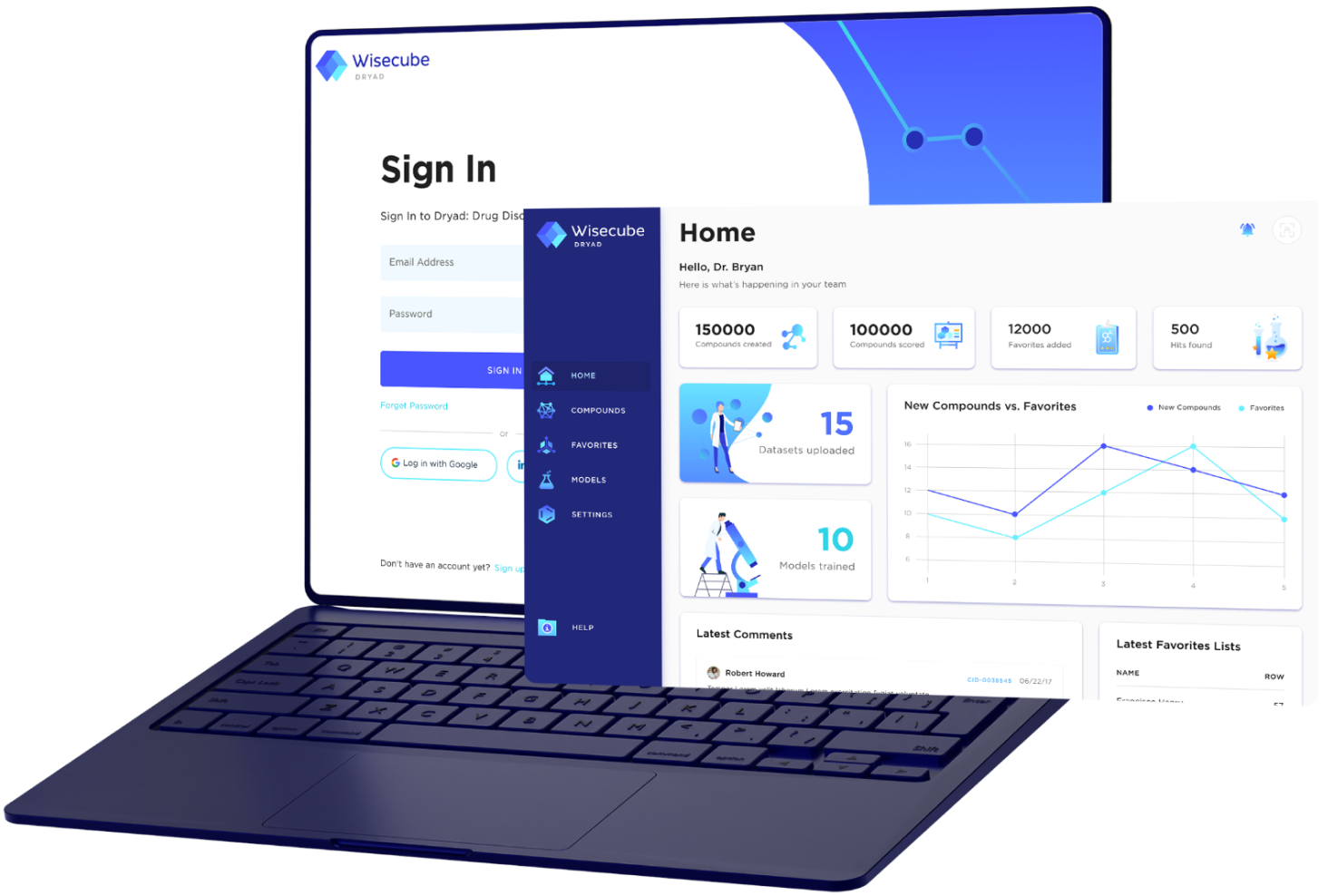
CLIENT SUCCESS: IT STAFF AUGMENTATION IN HEALTHCARE AI
EXPERTISE
HealthCare
AI
TECHNOLOGIES
WHAT CLIENTS SAY ABOUT WORKING WITH WTT AUGMENTED ENGINEERS
INDUSTRY RECOGNITION

AI Assistant
Partner & CIO
They're true partners in innovation. WTT Solutions' efforts have resulted in a successful MVP launch, over 80% user adoption, and 99.9% system uptime. The team has excellent project management, is responsive, and adapts quickly to changes. Their technical excellence and deep understanding of the client's business goals stand out.

eSimplify
Founder & CEO
WTT Solutions has been successful in delivering a beta product within 3—4 months. Facilitating a weekly update about the project's status, the team made sure concerns and issues are quickly addressed. They show genuine interest and dedication in assisting their partner to achieve their goals.

MuchSmarter
CPO
WTT Solutions satisfyingly completed the project, enabling the company to host various courses for students in different nations. The team kept everyone informed in Slack and coordinated concerns directly to the client, ensuring immediate response and solutions. Overall, their precision stood out.

The return on investment you can expect from our work

Who we are

Watch
1:35
We're not just talking about great products. We make them together with our clients.
Our cases

Clients about us
IT STAFF AUGMENTATION VS OTHER ENGAGEMENT MODELS
The right model depends on how much control you need, your internal PM capacity, and the scope of the work. Prefer vendor-managed delivery? See software development outsourcing. Single-tenant line-of-business systems those seats may work on live on enterprise software development services.
- Advantage
- Limitation or compromise
- Criterion not met
IT STAFF AUGMENTATION PRICING
Transparent monthly retainer ranges based on seniority and domain expertise. All engagements include IP assignment, NDA, and a dedicated account manager. Healthcare and EdTech domain premiums reflect specialized vetting.
Starter
$8,000 – $15,000 / mo
1–3 engineers
- 1–3 senior engineers (T&M)
- 2-week onboarding SLA
- Your PM manages day-to-day
- Standard NDA + IP assignment
- 30-day exit notice
- Monthly check-in with WTT account lead
Scale
$20,000 – $50,000 / mo
4–8 engineers
- 4–8 engineers (mixed seniority)
- Healthcare or EdTech domain expertise
- Tech lead or architect available
- BAA execution for HIPAA projects
- Bi-weekly WTT success review
- 14-day replacement guarantee
Enterprise Pod
Custom (from $60,000 / mo)
10+ engineers
- Full-stack pod (FE, BE, DevOps, QA)
- Dedicated WTT engineering manager
- SOC 2 / HIPAA compliance package
- Custom SLAs and reporting cadence
- Priority replacement within 5 business days
- Quarterly strategic review


SCALE YOUR ENGINEERING TEAM THIS WEEK
Languages, tools, and frameworks
Mobile roles above include Flutter. When the work is a Flutter product rather than one seat on a mixed team, see our Flutter app development company page for delivery-owned builds.
 OpenAI
 Google Gemini
 Anthropic Claude
 LangChain
 LlamaIndex
 Perplexity API
 RAG / Pinecone / Qdrant


 PostgreSQL
 MySQL
MySQL MongoDB
 Redis
Redis Docker
 Kubernetes
 Terraform
 GitHub Actions


Here’s how you can get in touch
FREQUENTLY ASKED QUESTIONS ABOUT IT STAFF AUGMENTATION
What is IT staff augmentation?
Staff augmentation vs managed services — which should we choose?
How much do IT staff augmentation services cost?
What roles can you augment (and which stacks)?
Staff augmentation vs hiring full-time employees — when is each better?
Who manages the augmented team day to day?
How do you vet and replace engineers if someone is not a fit?
How do augmented engineers support healthcare security and BA compliance?
What does workforce augmentation mean?
Workforce augmentation means adding outside specialists to a team you already manage, for a defined stretch of work, without opening a full-time requisition. In software, that usually means engineers who join your standups, your repo, and your sprint, while you keep the backlog and the technical decisions. The vendor supplies the person and the contract. You supply the work.
People use the phrase for any function, not only engineering. A finance team can augment accountants. A hospital can augment analysts. On this page the phrase means software engineers added to a product team. You still run prioritization. The contract is a monthly seat, not a fixed deliverable owned by a vendor project manager. If nobody on your side can assign the work, augmentation is the wrong model, and a delivery contract fits better.
Which companies are the best staff augmentation?
No public ranking identifies a single best staff augmentation company, because fit depends on your stack, your domain, and who manages the work. Score vendors on four checks: you interview the engineer who will join, the contract assigns IP to you, timezone overlap covers your standup, and the firm replaces a poor fit inside a written window.
Useful evidence is a named engineer with a code sample, a domain project you can ask about, and a contract that assigns intellectual property to you on day one. Healthcare work also needs a business associate agreement before anyone can see protected health information. Timezone overlap should cover your standup without asking the engineer to work a night shift. Replacement terms should say how many days you wait if the person is not a fit. Agencies that will not put those terms in writing are hard to compare, whatever their site claims.
What are the main IT staff augmentation challenges and how do you prevent them?
The main IT staff augmentation challenges are a slow start, a weak skill match, and timezone silence. Prevent a slow start by provisioning repo, board, and chat access before day one. Prevent a weak match by interviewing the named engineer, not a proxy. Prevent silence by requiring overlap that covers your standup.
A second failure mode is role confusion. If your lead cannot point at the board and say which tasks are the engineer's, the seat will idle. Write that down before the start date. A third is access. Repository, chat, and board invites that wait on a manual ticket are the usual reason a two-week start slips. Healthcare adds a fourth: no business associate agreement, no access to anything that might contain protected health information. The contract step on this page budgets 2–3 business days for that paperwork.
What is the difference between staff augmentation and outsourcing?
How does IT staff augmentation work at WTT Solutions?
How fast can you onboard developers?
Is staff augmentation suitable for healthcare / HIPAA projects?
Do augmented engineers work in our timezone / tools / Agile process?
What is nearshore IT staff augmentation and when does it help?
Why choose WTT Solutions as an IT staff augmentation company?
Can staff augmentation cover regulated medical software and Part 11 needs?
What does IT staffing mean?
IT staffing means filling technology roles, as permanent hires or as contract seats, through a firm that sources candidates. IT staff augmentation is the contract form: the engineer works inside your team for months, under your lead, and leaves when the roadmap no longer needs the seat. A firm that only runs permanent search is not running this model.
IT staffing covers two purchases that get mixed in RFPs. Permanent staffing fills a job you will employ. Staff augmentation fills a seat you will direct for a period and then release. The second purchase is what this page describes: engineers in your tools, under your lead, with a notice period rather than an employment contract. Ask a vendor which of the two they are selling before you compare rates.
What types of staff augmentation are there — on-site, remote, project-based and team-based?
Staff augmentation types split along where people sit and how the seat is sold. On-site means the engineer works in your office. Remote means they work from another location and join your tools. Project-based seats cover a bounded release, often four to twelve weeks. Team-based seats are a pod that stays for a quarter or longer under your PM.
On-site is uncommon for this nearshore model. The overlap section describes Eastern European engineers in UTC+2 to UTC+3, working remotely in your tools, with 6–8 hours of overlap on the US East Coast. Project-based work on this page is the short-term sprint seat, typically 4–12 weeks. Team-based work is the pod of about 4–10 people under your project manager, or a single engineer embedded for six months or longer. Remote does not mean a separate vendor squad with its own backlog.
How do we choose the right IT staff augmentation vendor?
Choose an IT staff augmentation vendor by testing the operating model, not the sales deck. Ask to interview the engineer who would join, read the IP and notice clauses, and check that overlap covers your standup. Ask for a written replacement window if the person is not a fit.
Compare three artifacts, not a capabilities slide. First, the profile of the person who would actually join, including a code sample your lead can review. Second, the statement of work: rate, notice period, intellectual property, and, for healthcare, the business associate agreement. Third, the overlap hours against your standup. If your team has no one who can direct the engineer, stop. That need is vendor-managed delivery, which is a different contract from a seat. Mixing the two in one RFP produces proposals you cannot compare.