Blog Aiservices

March 19, 2026
Employee training software development helps organizations create custom learning platforms tailored to their workflows, compliance needs, and growth plans. Unlike generic LMS tools, custom solutions offer full control over features, integrations, branding, and data security. From onboarding and compliance training to analytics and AI-powered learning paths, custom employee training platforms improve engagement, simplify management, and support long-term workforce development.


March 18, 2026
Enterprise learning software development enables organizations to build tailored LMS platforms that align with internal workflows, compliance requirements, and growth goals. Unlike off-the-shelf tools, custom solutions provide full control over features, integrations, and scalability. From onboarding and compliance training to advanced analytics and AI-driven personalization, enterprise LMS platforms help companies improve learning outcomes, streamline operations, and connect training directly to business performance.

March 18, 2026
Training and development software tools help organizations create, deliver, track, and improve learning programs at scale. From LMS and LXP platforms to authoring and assessment tools, these solutions support employee training, compliance, onboarding, and upskilling. The right platform improves engagement, reduces training costs, and gives businesses the flexibility to build stronger, data-driven learning strategies.

March 17, 2026
Custom corporate learning software development helps organizations build training platforms tailored to their workflows, compliance needs, and growth goals. Instead of adapting to generic LMS tools, businesses create scalable solutions with seamless integrations, advanced analytics, and personalized learning experiences. This approach improves engagement, reduces costs, and aligns employee development directly with business outcomes.
March 17, 2026
Custom education management software helps institutions streamline operations, improve student outcomes, and unify digital processes. This guide explores key features, development approaches, technology stacks, and cost factors behind building scalable education platforms. Learn how tailored solutions outperform off-the-shelf systems and how modern EdTech trends like AI and analytics are transforming learning environments in 2026.
January 16, 2026
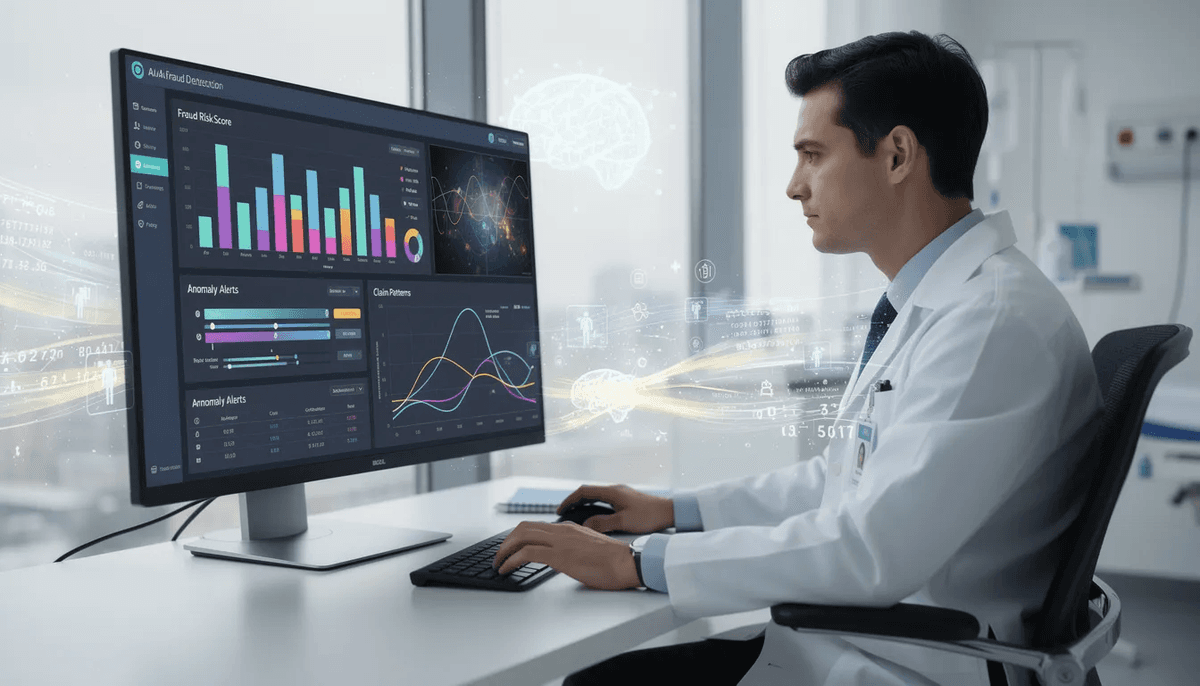
Healthcare application development is becoming a core growth driver for providers, payers, and digital health startups in 2025–2026. With telehealth, remote patient monitoring, and AI-driven care now standard, healthcare apps must deliver measurable outcomes—lower costs, improved workflows, and better patient engagement—while meeting strict compliance requirements. This guide explores market trends, app types, features, costs, and best practices to help healthcare organizations build scalable, secure, and results-driven digital solutions.

January 7, 2026
This article explores real-world examples of AI in medical diagnosis across imaging, cardiology, oncology, dermatology, and clinical text analysis. It explains how AI systems support earlier detection, improve diagnostic accuracy, reduce clinician workload, and expand access to care. The guide also addresses regulatory status, ethical risks, data security, and future directions shaping AI-driven clinical decision-making.

January 2, 2026
This article explores how machine learning is transforming healthcare in 2025, covering real clinical use cases, benefits for clinicians and patients, operational impact, regulatory realities, ethical risks, and why ML augments—rather than replaces—medical professionals.

December 10, 2025
This article explores the rapidly evolving regulatory landscape for AI in healthcare, covering U.S. federal and state laws, EU and UK frameworks, Asia-Pacific initiatives, and emerging standards for SaMD, CDS tools, chatbots, diagnostics, and prior authorization. It explains key challenges, transparency requirements, and future regulatory trends shaping medical AI adoption.

December 5, 2025
AI is shifting healthcare from reactive treatment to proactive prevention by predicting disease risks before symptoms appear. Using machine learning, medical imaging AI, NLP, and continuous monitoring, AI identifies early warning signs, enables timely interventions, and personalizes prevention strategies. This transformation improves early detection rates, lowers healthcare costs, and helps patients maintain long-term health through data-driven insights.
December 5, 2025
IoT and AI are transforming healthcare by enabling continuous patient monitoring, real-time diagnostics, and predictive insights. Connected medical devices gather vital data, while AI analyzes patterns to detect risks early, improve accuracy, and optimize hospital operations. This powerful convergence boosts care quality, reduces costs, enhances remote monitoring, and shifts healthcare from reactive treatment to proactive, personalized prevention.
December 4, 2025
AI medical documentation is transforming clinical workflows by automating the capture, transcription, and structuring of patient-physician conversations. Using speech recognition, NLP, and large medical language models, AI scribes generate accurate clinical notes in real time, reduce after-hours charting, and save physicians 2+ hours daily. This intelligent automation improves care quality, reduces burnout, and brings healthcare closer to fully ambient, seamless documentation.

would you like to receive notifications about our updates?

Your subscription is confirmed.
Thank you for being with us.